A Campervan in a Forest
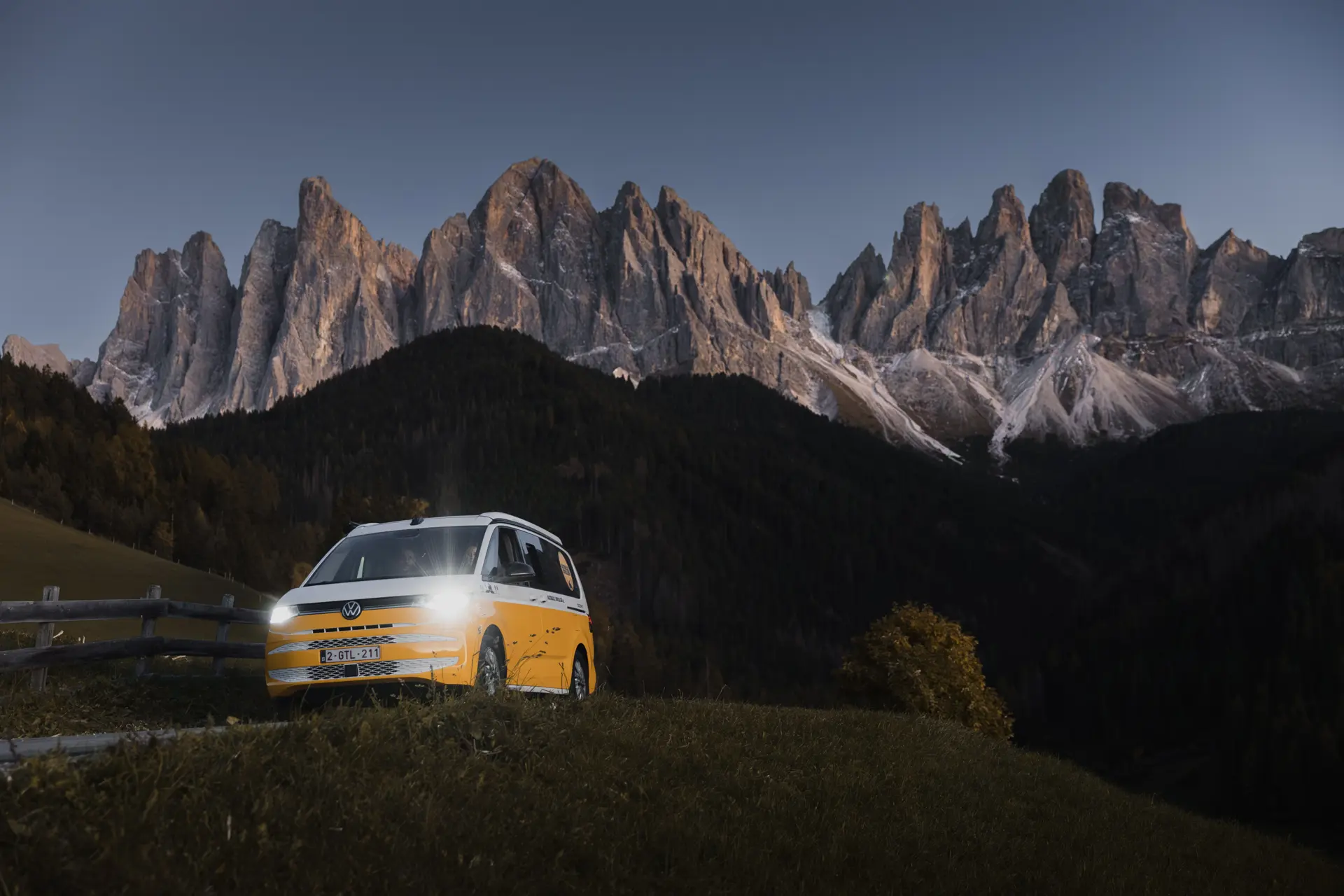
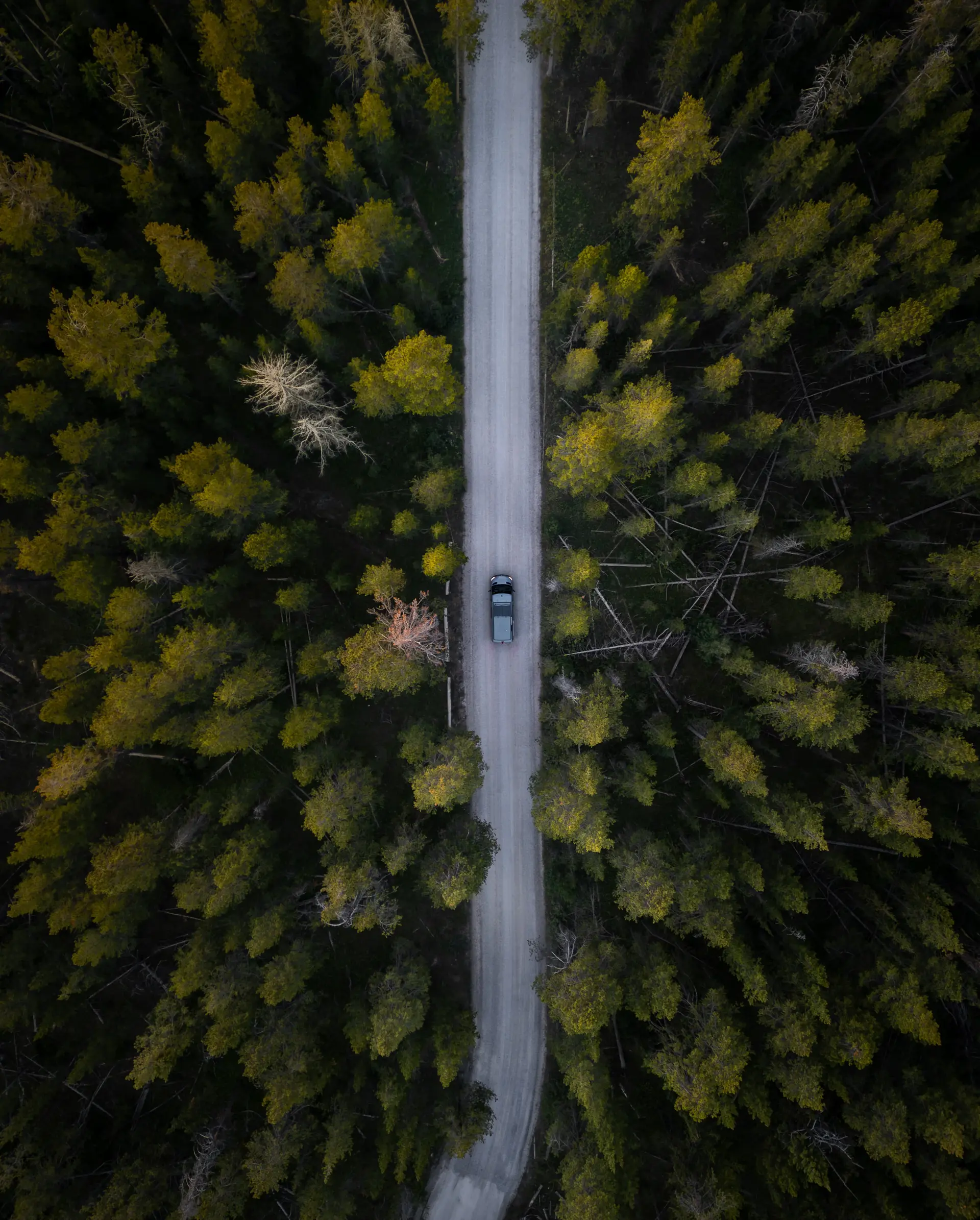
There is a campervan moving slowly through a forest in late afternoon, with the kind of light that turns the windows into lanterns. The vehicle isn't from a fleet; it has been built (fitted, lined, finished) by people who clearly think a road trip is a serious thing. Somewhere a couple of hours later, a guest will book the next trip directly from the brand's website without ever opening a comparison platform.
That guest didn't choose the campervan because of price. They chose it because everything they had seen, every photograph, every page, every caption, pointed to the same answer about what this trip would feel like.
We've watched the same pattern across hotels, restaurants, and experience brands: visual identity earns direct bookings.
The Quiet Conversation About Platform Dependency
There's a conversation happening in independent hospitality about platform dependency, and the arithmetic is well-known: 15 to 30 percent of every reservation goes back out the door as commission, and the share of independent hotel reservations flowing through platforms keeps rising. Margins shrink, bigger chains negotiate better terms, the independent operator watches the slide.
What's less often said is that the platforms aren't really the problem; they're a symptom. The platforms are catastrophically good at the rational decision (price, location, amenities) and catastrophically bad at the irrational one (feeling, intuition, sense of fit). When a guest decides between two stays on a platform, they're using the rational tools the platform gives them, because the irrational ones aren't available there.
The properties that earn direct bookings share a single trait: their guests rarely start on the platform at all. They arrive at the property's own website first, pulled there by a friend's recommendation, by an image saved on Pinterest, by a search result that led somewhere unmistakably alive. By the time they're ready to book, the platform is almost irrelevant.
What pulls them is visual identity: the visual grammar that signals this place is for me before I've checked the price. That signal isn't built by a logo; it's built by a coherent body of photography, a way of writing, a structure of pages, a kind of attention to detail a guest senses before they can articulate it. We keep noticing this with the brands the studio works with: when their visual identity becomes recognisable across their channels, the share of bookings that come direct begins to shift. Not overnight, not dramatically, but measurably and durably.
Why It Matters Beyond Commission
The opportunity is bigger than commission savings. A property that earns its direct bookings owns its guest list, its relationship, its emails, its repeat business, its off-season communication, and its rate. It can choose its own pace of marketing rather than being scheduled by an algorithm. It can refer a guest to the bakery down the street and have the referral mean something, because the bakery and the guesthouse share an audience by design.
A property that depends on platforms, by contrast, is in a permanently rented relationship with its own guests. Every booking begins as a stranger and ends as a row in a CSV. The guest's loyalty, when it forms, accrues to the platform, not to the property; the property is one of many in that platform's catalogue, and it is shown most often when its rate is lowest.
Visual identity is the cheapest and most durable lever an independent operator has against this state of affairs. It is cheaper than building a competing booking engine, cheaper than running paid acquisition, cheaper than discounting. It compounds: every season's photography, every page redesign, every well-considered caption builds on the last. And it does something the platform can never do: it makes the property unmistakably itself.
This is why visual identity isn't, properly speaking, a branding project. It is a strategic business decision with a slow-burning return that, season after season, becomes the property's most reliable source of margin.
The Five Pillars of an Identity That Earns Direct Bookings
One: Articulate the Actual Values
Not the values you think you should have, but the actual values that guide your decisions: what you say no to, what you spend disproportionately on, what guests notice that you didn't think they would. Visual identity needs to be rooted in actual values; when it is, every decision downstream is easier, and when it isn't, the identity unravels at the first cost pressure.
The drift away from this principle is to write a values document and then ignore it. Values that don't show up in choices aren't values; they're decoration.
Two: Translate Values into Visual Language
A value of craft needs to express itself in photography that respects materials, in typography that has weight, in palettes that aren't apologetic. A value of warmth needs visuals that look approachable rather than aspirational. The translation step is what most properties skip. They articulate what they care about, and then the design work that follows could belong to any property in their tier.
The drift here is to separate photography from the rest of the visual system, hiring different specialists who don't speak to each other. The result is a website that has a logo from one decade, images from another, and copy from a third.
Three: Document the Place as It Lives
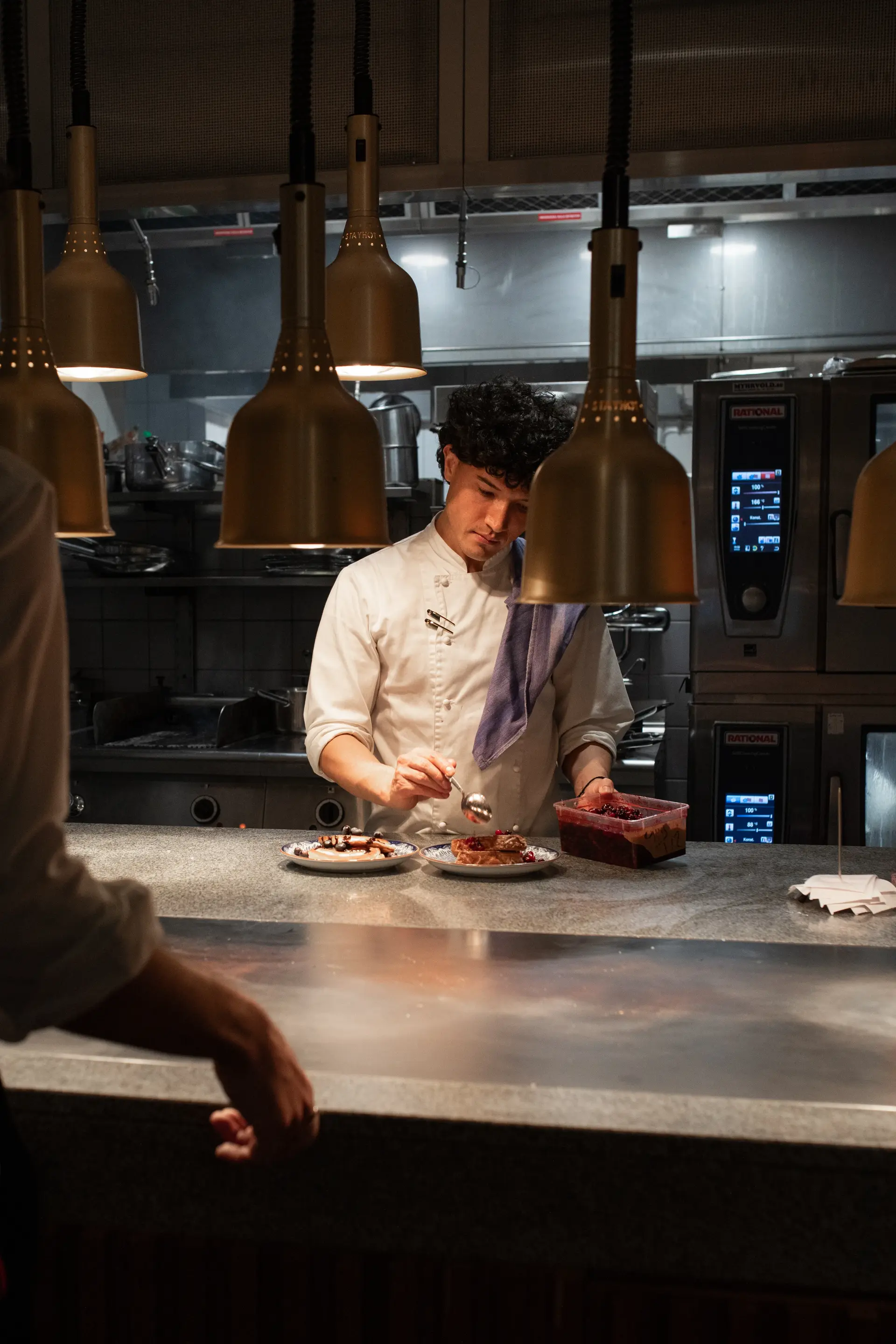
Not just launch photography, but real-time, honest documentation of how the property actually lives: behind-the-scenes moments, seasonal documentation, guest moments, detail work, the team's presence in the space. That honest documentation is what builds trust over time; it's also what gives the website something new to say in March, in August, in November.
The drift here is to treat a website as a static asset that gets refreshed every five years. A static website ages quickly; a documented website stays alive.
Four: Own the Channels That Matter Most
The property's own website should be fast, beautiful, and built around conversion to direct booking. The email list should be a direct line to past and potential guests, not a newsletter no-one reads. The social channels should drive traffic toward the property's domain, not toward a platform that happens to list it.
The drift here is to optimise the platform listings at the expense of the property's own channels. The platforms will always be a useful supplement; they should never become the primary stage.

Five: Make the Direct Path Feel Inevitable
Once a guest has decided they want to stay, the experience of booking direct should be at least as smooth as the platform's, ideally smoother. And the reasons to book direct should be immediately visible: a small rate advantage, a personal note in the confirmation, the use of a real first name, the off-season offer that the platform never sees.
The drift here is to leave the booking engine as the cheapest piece of the website, with friction that makes the platform feel easier. Every minute spent making the direct path feel inevitable is the highest-leverage investment in the property's margin.
How the Studio Has Approached This
We worked with Natural Nomads, a small operator producing custom-built campervans for independent travel, at the moment they realised their identity wasn't matching their craft. They had built remarkable vehicles and were quietly losing the booking conversation to bigger rental fleets that had nothing comparable to offer. The brief we agreed on was to document the vehicles the way their owners actually used them: parked in the kind of forests and high passes the brand was designed for, in the kind of light their guests would remember from the trip. We didn't restage scenes; we followed real journeys. The library that came back wasn't selling vans. It was extending an invitation to a kind of trip.
A second case, an independent restaurant in central Europe, had the opposite problem: a strong kitchen, an interior the team had worked on for years, and a website built by a friend in 2018. The framework here started not with photography but with the actual values that guided the kitchen: how long the menu took to evolve, how often staff stayed for years rather than weeks, how a dish was sent back if a single ingredient wasn't right. Once those values were named honestly, every visual decision that followed had a reference point, and the new website lost the platform reservation widget on its homepage. Direct reservations through the property's own form began to climb the next quarter, not because of a clever campaign, but because the website had finally caught up with the kitchen.
The Property That Has Become Unmistakably Itself
The path to direct bookings isn't paved by a better booking engine, and it isn't paved by a discount banner. It is paved by a property that has become unmistakably itself, visually, verbally, structurally, across every channel where a guest might encounter it for the first time.
Visual identity is the cheapest, longest-lasting investment a property can make against the slow erosion of margin to platforms. It compounds, and it compounds in the property's favour.
Offpath Creative Studio helps independent hotels, restaurants, and experience brands build the visual identity that earns direct bookings. If your property has personality that booking platforms can't convey, let's talk about what coherence looks like for your channels.
Let's talk